If your home has a septic tank, you can still enjoy the convenience and hygiene of an InSinkErator food waste disposer. Here's everything you need to know.
6 million homes on a septic tank have a food waste disposer
An urban myth in New Zealand is that food waste disposers can’t be used with septic tank systems. The reality is, food waste disposers have always been safe for use with properly sized and maintained septic systems.
If your septic system is sized to handle everyday appliances like a dishwasher or washing machine, it can comfortably accommodate a food waste disposer too. In fact, a disposer uses only about as much water each day as one toilet flush.
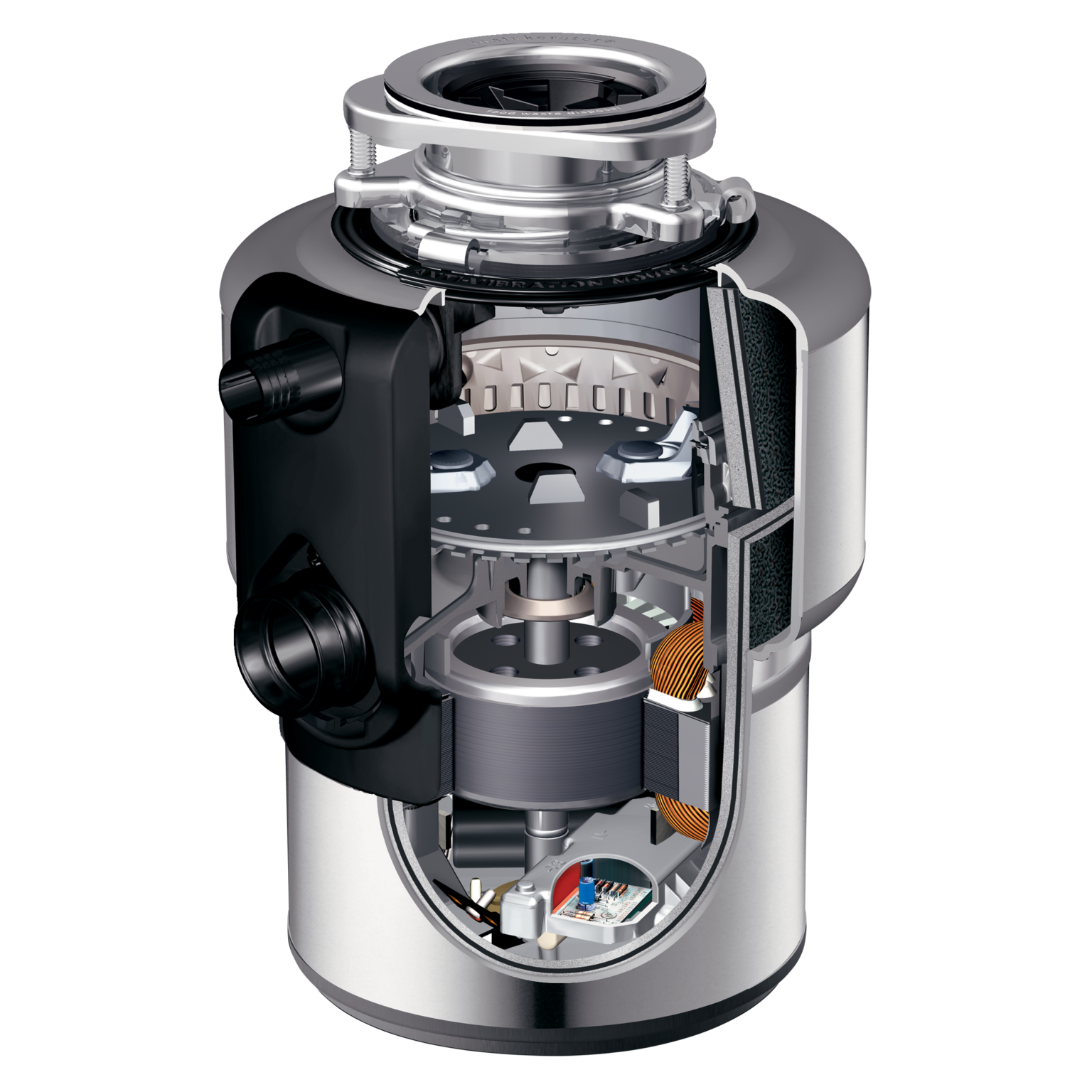
Engineered to handle even the toughest food waste with the least noise of any disposer, the Septic Evolution Series is the most advanced line of food waste disposers available anywhere.
QuickLock® Technology
“twist-on. twist-off” sink mount makes installation fast and easy.
SoundSeal® Technology
Advanced Series garbage disposals feature two levels of SoundSeal® Technology for a quieter kitchen.
MultiGrind® Technology
3-stage design makes quick work of both hard and fibrous foods
DuraDrive® Induction Motors
Powerful, heavy-duty motors ensure high performance and long life.
Check out the grind test to show how little load there is on a septic system
This video shows different food waste being ground, and how small the particles become once the food waste has gone through a food waste disposer.
The system handles it.
Food scraps break down faster than other household waste, and because they’re 75 to 80% water, they add very little to the solids in your tank. Studies show that septic systems connected to a food waste disposer don’t need pumping any more frequently than those that aren’t. The kitchen keeps moving. The system keeps up.
Less water than you'd think.
A review of ten independent studies found that food waste disposers use less than five litres of water per household per day — roughly the same as a single flush of the toilet. The idea that a disposer will overload your wastewater system simply doesn’t hold up to the research.
It may actually help.
Research from ten US states found that where food waste disposers are in regular use, the increase in suspended solids is only 20 grams per day. The high carbon content of food waste could even help remove nutrients like nitrogen and phosphorus as water discharges into drainage fields — a potential benefit most people wouldn’t expect.